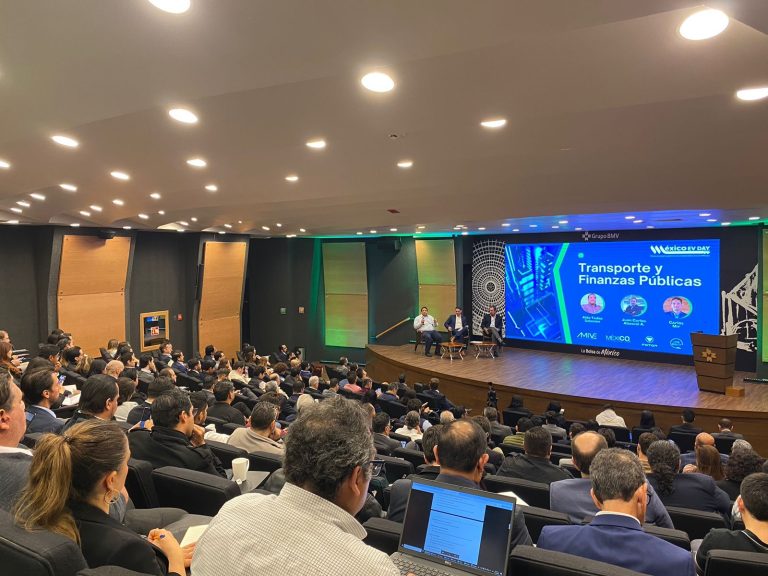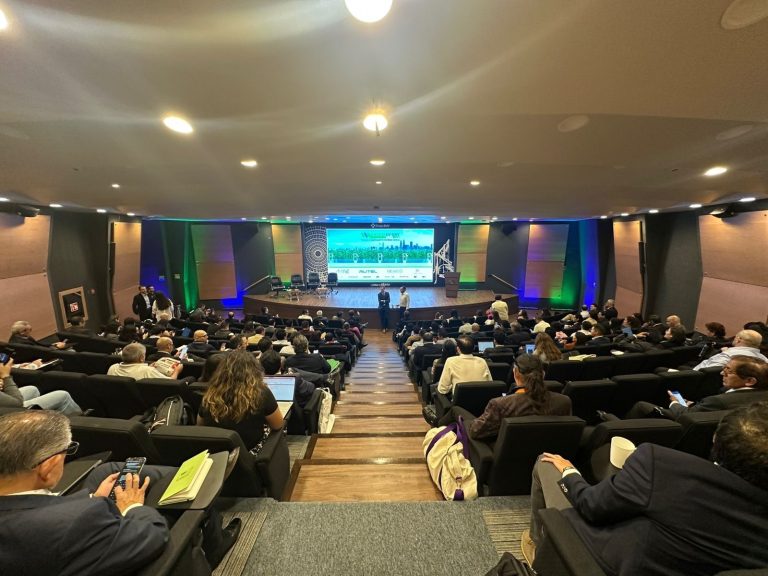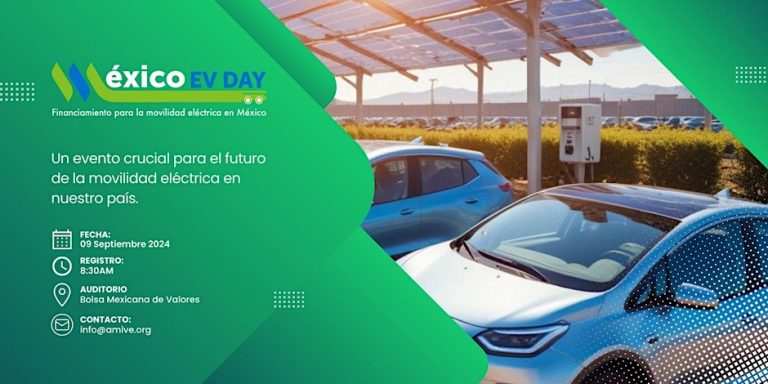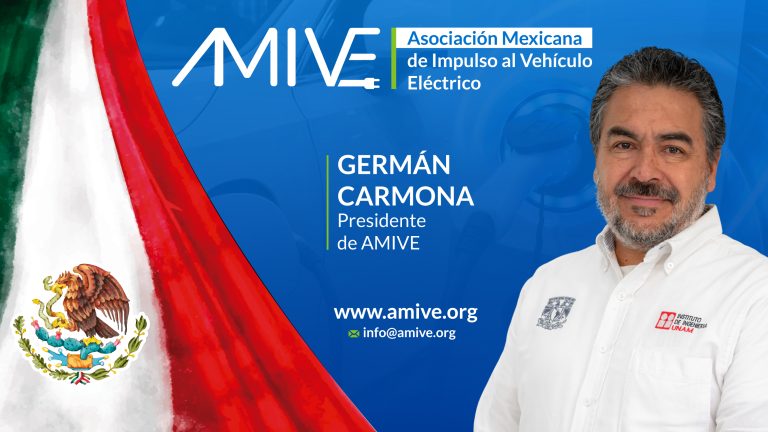

Mexico’s electromobility market is at a decisive moment. In a recent interview with Fotón Latam magazine (December 2025 edition), Germán Carmona Paredes, President of the Mexican Association for the Promotion of Electric Vehicles (AMIVE), shared an in-depth analysis of the challenges and opportunities facing the sector, as well as the critical role regulation must play in enabling an orderly, competitive, and sustainable transition.
Below is a summary of the main points discussed in the interview.
Tariffs and market rebalancing
One of the central topics was the potential introduction of tariffs on electric vehicles imported from China. From AMIVE’s perspective, this measure will not necessarily translate into proportional increases in final consumer prices. According to Carmona, Chinese manufacturers have sufficient margins to absorb part of the impact, meaning that price increases could remain moderate.
Beyond the pricing debate, AMIVE’s president emphasized that this new context could lead to a positive rebalancing of the market, in which stronger companies—those with solid after-sales service, spare parts availability, and long-term commitments—will prevail. Business models lacking local support or sustainability are likely to exit the market, ultimately strengthening consumer confidence and sector maturity.
A level playing field for domestic industry
Carmona stressed the importance of creating a level playing field for Mexican companies that have invested in domestic technological development. He highlighted initiatives such as the Taruk project—electric buses developed by DINA and UNAM in partnership with MegaFlux—whose initial production phase is already underway.
While Mexico has the technical capabilities and talent to develop high-quality electric vehicles, the main challenge remains economic. Dependence on imported inputs—particularly batteries, electronics, and strategic materials—drives up costs. For this reason, AMIVE considers it essential that public policies recognize and value domestic content as a key factor in competing with foreign technologies.
Market growth: progress and limitations
Growth in electromobility in Mexico has been remarkable in percentage terms, with electric vehicle sales doubling year over year. However, overall market penetration remains low: fully electric vehicles account for less than 1% of the total vehicle fleet.
By contrast, hybrid vehicles have seen much faster adoption and have become firmly established as a natural transition technology. For AMIVE, this trend confirms that transport electrification is irreversible, while also underscoring the need to improve classifications, standards, and infrastructure planning.
Charging infrastructure: the key enabler
One of the most critical challenges identified is the development of charging infrastructure. Carmona noted strong private-sector interest in investing in public charging stations, while also emphasizing the importance of promoting home charging, where feasible, as the most efficient and cost-effective option for both users and the electric grid.
At the same time, fast and strategically located charging is essential for public transport, freight, and urban corridors. This creates significant challenges for grid planning and investment, involving the CFE and regulatory authorities. In this area, AMIVE maintains ongoing dialogue with government stakeholders to ensure that infrastructure growth is technically sound and well coordinated.
Technical regulation and long-term vision
Drawing on his academic and technical background, Germán Carmona emphasized that regulation should not be seen as a barrier, but rather as an enabler of development. Clear, predictable, and technically robust rules reduce uncertainty, attract investment, and accelerate the adoption of new technologies.
He also highlighted the urgency of advancing technical standards for charging infrastructure and of integrating electromobility strategically into broader discussions, such as the renegotiation of the USMCA (T-MEC), where this sector will play an increasingly important role.
AMIVE’s role
Two months into his term as President of AMIVE for the 2025–2027 period, Germán Carmona reaffirmed the association’s core objective: to organize and guide the growth of electromobility in Mexico from a neutral, technical, and collaborative perspective, fostering direct and constructive engagement with government, industry, and academia.
AMIVE will continue to promote public policies, regulatory frameworks, and initiatives that strengthen domestic industry, accelerate the energy transition, and position Mexico as a relevant player in electric mobility across the region.
Source: Interview with Germán Carmona Paredes, President of AMIVE, published in Fotón Latam magazine, December 2025.